Best Cat Food in Saudi Arabia: How to Choose What Goes in the Bowl
  • 02 Oct, 2026
  • by Soluky Pet

Best Cat Food in Saudi Arabia: How to Choose What Goes in the Bowl

Dry, wet or fresh? Imported or local? Choosing cat food is simpler than the shelf makes it look, once you know what a cat's body is built to eat. Here is an honest comparison of every format, a 60-second label check, real costs per day, and the things Saudi cat parents in particular should factor in.

The quick answer

  • Cats are obligate carnivores: they need real meat, taurine and plenty of water from their food.
  • Look for a named meat first and a "complete and balanced" (AAFCO or FEDIAF) statement.
  • Dry food is cheapest but only 8 to 10% water. Wet and fresh food are 70 to 80%.
  • Compare protein without the water: fresh food that looks low on the label is often higher.
  • Change food slowly, over 7 to 10 days, and portion by weight.

What a cat actually needs

Walk into any pet shop in Riyadh or Jeddah and the cat food aisle is a wall of bags, cans and pouches, all promising the same thing. Choosing well is simpler than it looks, once you know what a cat’s body is actually built to eat.

Cats are obligate carnivores. That is not a marketing phrase; it is biology. A cat needs nutrients that only come ready-made from animal tissue:

  • Taurine, an amino acid cats cannot make enough of themselves. It supports the heart and eyes, and a long-term shortage causes serious disease.
  • Arachidonic acid and preformed vitamin A, which dogs and people can build from plant sources but cats cannot.
  • High protein, used for energy, not just for muscle. A cat’s liver keeps burning protein even when food is short, so a low-protein diet leaves it running on empty.
  • Water in the food. Cats evolved from desert ancestors that drank little and got most of their water from prey.

Every good choice in this guide follows from those four facts.

Dry, wet or fresh: an honest comparison

There is no villain here. Each format has honest trade-offs:

Dry food (kibble) Wet food (cans, pouches) Gently cooked fresh food
Water content About 8 to 10% About 75 to 80% About 70 to 75%
How it is made Extruded at high heat Cooked and sealed in the can Cooked at lower heat, chilled or frozen
Typical first ingredient Varies: meat meal or grain in cheaper bags Varies widely by brand Named fresh meat
Storage Months, at room temperature Long shelf life until opened Fridge and freezer
Cost per day Lowest, usually a few riyals Middle Highest

Dry food wins on price and convenience. Its weakness is water: a cat eating only kibble has to drink far more to make up the difference, and most cats do not. That is why so many vets suggest at least some wet or fresh food in every cat’s diet, and it matters even more in a hot climate. We explain the maths in our guide to cat urinary health and hydration.

How to read a cat food label in 60 seconds

You do not need to be a nutritionist. Four checks cover most of it:

  • A named meat comes first. “Chicken” or “lamb” is clear. “Meat and animal derivatives” or “poultry by-product meal” tells you much less about what is inside.
  • It says “complete and balanced”. Look for a statement that the food meets AAFCO or FEDIAF standards for your cat’s life stage. Food labelled “complementary” or “topper” is not meant to be the whole diet.
  • Grains and fillers are not near the top. Cats have no nutritional need for corn, wheat or soy. A little is not harmful, but it should not be doing the heavy lifting.
  • Compare protein on a dry-matter basis. Wet and dry foods look impossible to compare because water skews the label. Take the water out and it becomes clear.

That last point is worth a worked example. Our Purrfect Chicken meal lists 15.6% protein at 75% moisture. Remove the water and protein is about 62% of the food. A typical dry cat food lists around 32% protein at 10% moisture, which is about 36% once the water is removed. The fresh food is not “lower in protein” as its label might suggest. It is higher.

What Saudi cat parents should factor in

A few things are specific to raising a cat here:

  • Heat and air conditioning. Long, hot months and dry indoor air quietly increase how much water a cat loses. Moisture in the bowl is the easiest place to make that up.
  • Indoor, neutered cats gain weight easily. Most Saudi cats live indoors, and neutering lowers energy needs by roughly 20 to 30%. Portion by weight, not by eye, using our grams-per-day feeding chart.
  • Long-haired breeds. Persians and Shirazis are among the most loved cats in the Kingdom, and their coats and faces bring their own feeding needs. See our guide to feeding Persian and Shirazi cats.
  • Fussy eaters. Cats choose food by smell first. Warming food slightly, or a spoon of plain bone broth, often wins over a reluctant cat.

What it costs per day

Price per bag is misleading; price per day is what matters. For an average adult cat eating about 140 g of fresh food a day, our recipes compared side by side work out at roughly 13 to 21 riyals a day on subscription, depending on the protein. Dry food costs less per day, usually a few riyals.

Many cat parents land in the middle: fresh or wet food as the main meal, for the water and the protein, with a smaller amount of good dry food if budget calls for it. That is a sensible, honest compromise, and far better than kibble alone.

Switching food without upsetting the stomach

Whatever you choose, change it slowly. Cats are more sensitive to sudden switches than dogs, and a rushed change is one of the most common causes of an upset stomach.

  • Mix a little of the new food into the old, and increase it over 7 to 10 days. Fussy cats may need two weeks.
  • Serve food at room temperature or slightly warm, never straight from the fridge.
  • If stools loosen, hold at the current mix for a few days before moving on.

Our transition guide has a day-by-day plan, and if a switch does upset things, see what to feed a cat with diarrhea.

The short version

The best cat food is the one that puts real, named meat first, carries a “complete and balanced” statement, brings plenty of water with it, and that your cat will actually eat. Everything else is detail.

If you want the easy version: every Soluky cat meal is gently cooked, grain-free, 71 to 75% moisture, and formulated to AAFCO and FEDIAF standards. You can read every ingredient we use and why. Build your cat’s box and save 15% on every autoship order.

Fresh Cat Meals Worth a Try

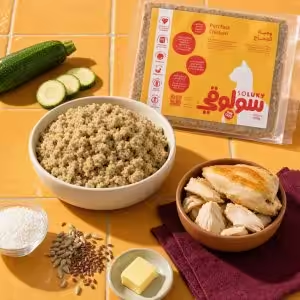
Purrfect Chicken Cat Meal – 150gm

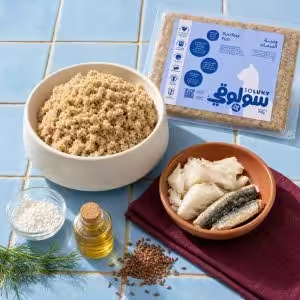
Purrfect Fish Cat Meal – 150gm

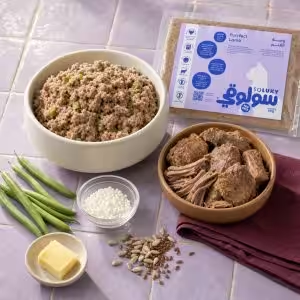
Purrfect Lamb Cat Meal – 150gm

Frequently Asked Questions

There is no single best brand for every cat, but the best foods share the same traits: a named meat as the first ingredient, a “complete and balanced” statement meeting AAFCO or FEDIAF standards, plenty of moisture, and a recipe your cat actually enjoys. For most cats, that means wet or gently cooked fresh food as the base of the diet.

No, dry food is not bad in itself, and many cats eat it for years. Its weakness is water: at 8 to 10% moisture, a cat eating only kibble needs to drink much more to make up the difference, and most cats do not. Mixing in wet or fresh food is the simplest improvement.

A typical 4 kg adult cat eats about 130 to 170 g of gently cooked fresh food a day, split into two meals. Neutered and indoor cats often need the lower end. Our grams-per-day chart gives ranges by weight.

Not as a long-term diet. Plain chicken is a useful short-term bland meal, but on its own it lacks calcium, taurine and several vitamins a cat needs. A food labelled complete and balanced covers those gaps.

Cats have no nutritional need for grains, so grain-free food suits them well, and all Soluky cat meals are grain-free. But grain-free is not automatically higher quality: what matters more is real meat first and a complete, balanced recipe.