
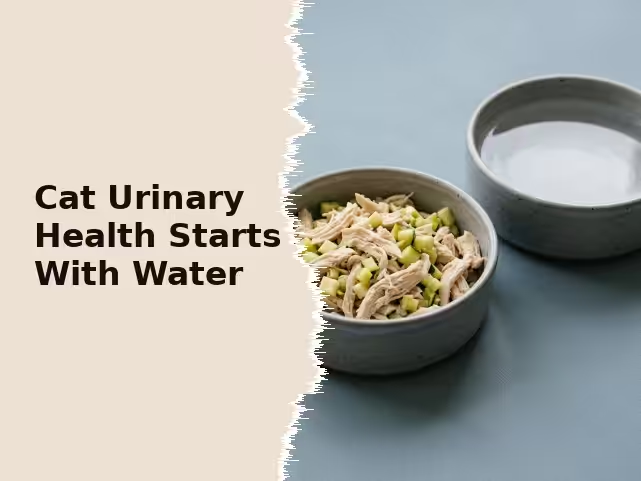
Cat Straining to Pee? Urinary Health, Water and What to Feed
  • 19 Sep, 2026
  • by Soluky Pet

Cat Straining to Pee? Urinary Health, Water and What to Feed

Straining in the litter box with nothing coming out is one of the few true emergencies in cats, and in males it can become life threatening within a day. Here are the signs that mean go to a vet now, why urinary trouble is usually a hydration story, and the moisture maths that explains why it matters more in Saudi homes than most pet parents realise.

The quick answer

  • Straining with little or no urine is an emergency, especially in male cats. See a vet the same day.
  • Cats have a weak thirst drive, inherited from desert ancestors. Many on dry food are mildly dehydrated all the time.
  • Dry food is about 10% water. Gently cooked fresh food is about 70 to 75%.
  • For a 4 kg cat that is a difference of roughly 100 ml of water a day, from food alone.
  • Food is daily prevention, not first aid. Nothing you feed will open a blocked urethra.

First: is this an emergency?

If your cat is walking in and out of the litter box, crouching, straining, and producing almost nothing, stop reading and call a vet today. In a male cat that pattern can mean a blocked urethra, and a full blockage can turn life threatening within about 24 to 48 hours.

These are the signs that mean “go now”:

  • Straining in the box with little or no urine coming out
  • Crying, howling or obvious pain while trying to go
  • Repeated trips to the box every few minutes
  • Blood in the urine, or urine that looks dark or pink
  • Licking the genital area far more than usual
  • A hard, tense, painful belly
  • Vomiting, hiding, refusing food, or going flat and quiet

Male cats are the higher risk group because their urethra is longer and much narrower than a female’s, so a plug of crystals, mucus and inflammatory debris can close it completely. A female cat with the same signs is usually less likely to be fully blocked, but she still needs to be seen, because the discomfort is real and the cause still matters.

One more thing, and it matters: do not wait overnight to “see how he is in the morning”, and do not try home remedies on a cat who cannot pass urine. There is no food, supplement or water trick that opens a blocked urethra. That part is a vet’s job, and it is usually a same-day one.

What is actually going wrong in there

Once your cat is safe, the useful question is why it happened. Vets group these signs under FLUTD, which stands for feline lower urinary tract disease. It is an umbrella term rather than a single diagnosis, and it covers a few different situations:

  • Feline idiopathic cystitis. Painful bladder inflammation with no infection and no stones. In younger cats this is the most common reason behind the signs, and stress is closely tied to it.
  • Crystals and stones. Minerals that come out of solution in concentrated urine, clump, and irritate or block the way out.
  • Urethral plugs. A mix of crystals, mucus and cells that jams the narrow male urethra.
  • Bacterial infection. Common in older cats and in cats with other conditions, but surprisingly uncommon as the cause in young adult cats.

That last point is worth sitting with, because it corrects a very common assumption. Many pet parents arrive certain their cat has “a urine infection” and expect antibiotics to fix it. In a young adult cat, an actual bacterial infection is often not what is going on, which is exactly why a vet visit and a urine test beat guessing at home.

The desert cat problem, and why Saudi homes make it worse

There is one thread running through most of these situations, and it is water.

Cats descend from desert-living ancestors who got nearly all of their water from the prey they ate. A mouse is roughly 70% water. Because of that history, cats never developed a strong thirst drive. A dog who eats dry food will usually drink more to compensate. A cat often will not. Many cats eating only dry food live in a state of mild, permanent, invisible dehydration, and they seem completely fine while doing it.

The consequence shows up in the bladder. Less water in means less urine produced, and what is produced is more concentrated. Concentrated urine holds minerals closer to the point where they fall out of solution and form crystals. It also sits in the bladder longer between visits, giving irritation more time to build. Dilute urine is simply a less hospitable place for that whole process.

Now add where we live. A Saudi summer means months of heat, and homes run air conditioning almost continuously, which pulls humidity out of the air and quietly increases how much water a cat loses just by breathing. Dry food is also the default diet in most Saudi households. Put a weak thirst drive, a 10% moisture diet, long hot months and dry indoor air together and you have a market where this problem is genuinely more likely, not less.

The moisture maths

This is where the numbers get concrete. Here is what different foods actually contain:

Food type Water content
Dry food (kibble) About 8 to 10%
Wet or gently cooked fresh food About 70 to 80%
Soluky cat meals 71 to 75%, depending on the recipe
A mouse, for reference About 70%

Put that into a real day. Take a 4 kg adult cat who needs roughly 200 kcal a day:

  • On fresh food, that is about 140 g a day. At roughly 75% water, the food itself delivers around 105 ml of water before your cat drinks a single drop.
  • On dry food, the same energy comes from only about 50 to 55 g of kibble. At 10% water, the food delivers around 5 ml.

That is a gap of about 100 ml a day, every day, and it has to come from the water bowl instead. A 4 kg cat needs somewhere around 200 ml of total water daily. Fresh food covers roughly half of that automatically. Dry food covers about 2%, and leaves the other 98% to a species that is famously unenthusiastic about drinking.

That is the entire argument for moisture, and it is worth being precise about what it means. It does not mean wet food is a medicine, and it does not mean dry food causes urinary disease on its own. It means water intake is the one variable you influence at every single meal, and the bowl is the easiest place to influence it.

Seven ways to get more water into your cat

Whatever you feed, these are the levers that actually move a cat’s daily water intake:

  • Make wet or fresh food the base of the diet. This is by far the biggest single change, for the reasons in the table above.
  • Add warm water or broth to meals. Stirring a few spoonfuls of warm water into food raises intake and releases more aroma, which helps fussy eaters at the same time.
  • Try a water fountain. Many cats prefer moving water and will drink noticeably more from a fountain than from a still bowl.
  • Use wide, shallow bowls. Deep narrow bowls press on the whiskers, which some cats dislike enough to cut a drink short.
  • Choose ceramic, glass or steel over plastic. Plastic scratches, holds odours and can put cats off.
  • Put water in several places, away from food and litter. Cats instinctively avoid drinking right next to where they eat or toilet. More stations in quiet spots means more casual sips.
  • Refresh it daily, twice in summer. Water that has sat warm all day in a Riyadh apartment is not appealing to anyone.

Two non-water habits belong on the same list, because they change how long urine sits in the bladder. Keep litter boxes clean and offer one more box than you have cats, so nobody holds it because the only box is unpleasant. And take stress seriously, since it is tied directly to the most common form of bladder inflammation in young cats: a new pet, building work, a house move, or a crowded feeding area can all show up as urinary signs.

What food can and cannot do

We would rather be straight about this than oversell it.

What better food genuinely helps with: raising daily water intake without asking your cat to change any habits, keeping body weight in a healthy range, since extra weight is a recognised risk factor here, and making mealtimes calmer and more predictable.

What no food can do: open a blocked urethra, replace a prescription therapeutic diet, or dissolve existing stones. Some stone types need a specific veterinary diet to manage, and some need surgery.

So if your cat has already had a blockage, or has been diagnosed with crystals or stones, your vet may put them on a therapeutic urinary diet. Follow that advice. Do not swap a prescribed diet for ours, or anyone else’s, without asking the vet who is treating your cat. Our meals are complete daily food for healthy cats, not a medical product, and we will always say so.

What we can tell you plainly is what is in the bowl. Every Soluky cat meal is gently cooked, 71 to 75% moisture, and built around real meat. You can read every ingredient we use and why, or compare all the recipes side by side.

The simple takeaway

Urinary trouble in cats looks sudden, but it usually builds quietly over months of slightly-too-concentrated urine. The emergency is a vet’s job. The prevention is a daily one, and it mostly comes down to how much water your cat takes in without having to think about it.

If you want the easy version: move the base of the diet from about 10% water to about 75%, keep fresh water in a few quiet places, and watch the litter box the way you would watch a warning light.

Worth reading next: our guide to keeping pets hydrated through the Saudi summer, and how much to feed your cat each day in grams.

Want it handled for you? Tell us about your cat and we will portion every meal to size and deliver it cold. Build your box and save 15% on every autoship order.

Gentle, High-Moisture Meals We Recommend
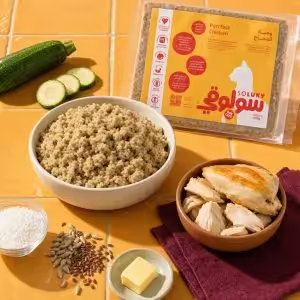
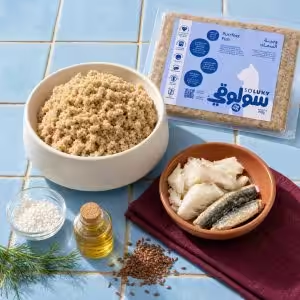
Purrfect Chicken Cat Meal – 150gm

Purrfect Fish Cat Meal – 150gm

Cat Chicken Bone Broth – 500ml

Frequently Asked Questions

Treat it as one, especially with a male cat. Straining that produces little or no urine can mean the urethra is blocked, and a full blockage can become life threatening in roughly 24 to 48 hours. Call your vet the same day rather than waiting overnight to see if it settles.

Dry food does not directly cause urinary disease, and plenty of cats eat it without ever having a problem. What it does is keep water intake low, because it is only about 10% moisture and cats have a weak thirst drive that rarely makes up the difference. That leads to more concentrated urine, which is one of the conditions crystals form in. Moisture is the lever, not kibble itself.

Roughly 200 ml a day for a typical 4 kg adult cat, from food and drinking combined. On gently cooked fresh food at about 75% moisture, the food itself supplies around half of that. On dry food it supplies almost none, so the whole amount has to come from the bowl.

It is a helpful change, but it is not a fix and it is not a treatment. Higher moisture supports more dilute urine, which is why vets so often recommend it. If your cat has been diagnosed with stones, crystals or a past blockage, follow the diet your vet prescribes and ask them before changing it.

Assume medical until a vet rules it out. Cats in urinary pain often start associating the box with discomfort and go elsewhere, frequently somewhere smooth and cool like a bath or tiled floor. Sudden litter box avoidance in a previously reliable cat deserves a check up before it is treated as a behaviour issue.