Kitten Feeding Guide: How Much and How Often, Week by Week
  • 02 Oct, 2026
  • by Soluky Pet

Kitten Feeding Guide: How Much and How Often, Week by Week

Kittens need more food per kilo than adult cats, in more meals, with nothing to spare. This week-by-week guide covers milk and weaning, a grams-per-day feeding chart from 8 weeks to 12 months, what should never go in a kitten's bowl, and when to move to adult food.

The quick answer

  • 0 to 4 weeks: mother's milk, or kitten milk replacer. Never cow's milk.
  • 4 to 8 weeks: weaning onto a soft mash, 4 to 6 small meals a day.
  • 8 weeks to 6 months: 3 to 4 meals a day, roughly 110 to 240 g of fresh food as they grow.
  • 6 to 12 months: 2 to 3 meals a day, easing down after neutering.
  • Weigh weekly. Switch to adult food at about 12 months.

Why kittens eat so differently

A kitten is not a small cat. In its first year it builds almost its entire adult body, and that shows up in the bowl in three ways:

  • More food per kilo. A growing kitten needs roughly two to three times more energy for its body weight than an adult cat.
  • A tiny stomach. It cannot fit all of that into one or two meals, so it needs several small ones a day.
  • Nothing to spare. Protein, taurine, calcium and DHA all have to be there every day, because they are going straight into bones, heart, eyes and brain.

That is why the rules below change so much in the first few months, and then settle down.
Birth to 4 weeks: milk only

For the first four weeks, a kitten needs only its mother’s milk. If you are caring for an orphaned kitten, it needs a kitten milk replacer from a vet or pet shop, fed from a kitten bottle every two to three hours, including at night.

Never give cow’s milk. Kittens cannot digest it properly, and it commonly causes diarrhea, which is dangerous at this size. If you have found a very young kitten, call a vet the same day: tiny kittens need warmth and feeding help before they need anything else.

4 to 8 weeks: weaning

Around four weeks, kittens start to get curious about their mother’s food. This is weaning, and it takes a few weeks:

  • Mix a little wet or gently cooked fresh kitten-suitable food with kitten milk replacer into a soft, smooth mash.
  • Serve it on a flat, shallow saucer. Kittens lap and paddle before they learn to eat.
  • Offer small amounts four to six times a day, and let them keep nursing as well.
  • Put down a shallow dish of fresh water now, and keep it there for life.

Over two to three weeks, thicken the mash and reduce the milk. Most kittens are fully weaned onto solid food by about eight weeks.

How much to feed a kitten: the chart

These are starting points for gently cooked fresh food, at about 1.2 to 1.35 kcal per gram. Your kitten’s own weight gain and body shape will tell you when to adjust.

Age Typical weight Meals a day Fresh food per day
8 to 10 weeks 0.8 to 1.2 kg 4 110 to 150 g
3 months 1.3 to 1.8 kg 4 150 to 200 g
4 to 6 months 2 to 3 kg 3 190 to 240 g
6 to 12 months 3 to 4 kg 2 to 3 180 to 230 g, easing down after neutering

Notice that a 5-month-old kitten can eat more than a fully grown adult cat. That is normal. Growth is expensive, and a well-fed kitten is the best start for a healthy adult. For adult amounts, see our grams-per-day feeding chart.

What to put in the bowl, and what never to

Choose food that is complete and balanced for growth. Check the label for a statement that it meets AAFCO or FEDIAF standards for kittens, or for all life stages. Food made only for adult maintenance may not carry enough of what a kitten needs.

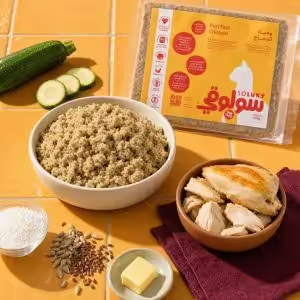
Favour moisture. Wet or gently cooked fresh food gives kittens water along with nutrition, and helps build good drinking habits early. Our Purrfect Chicken recipe is formulated to AAFCO and FEDIAF standards and suits kittens as well as adults.

Keep these out of a kitten’s bowl:

  • Cow’s milk and dairy
  • Raw meat and raw eggs, which carry a higher risk of bacteria for a young immune system
  • Onion, garlic and chives, which are toxic to cats
  • Cooked bones
  • Lots of tuna, which is not balanced as a main food

Keep treats small, under 10% of the day’s food, so they do not crowd out the nutrients a kitten is building with. For more on safe and unsafe foods, read what cats can eat from home food.

Water, weight and the weekly check

The single most useful habit in the first year is a weekly weigh-in on a kitchen scale. A steady gain of roughly 100 g a week in the early months is a common healthy pace, and your vet will tell you whether your kitten is on track.

  • Gaining steadily, full of energy: keep going.
  • Not gaining, or losing weight: call your vet. Kittens have very little reserve.
  • Loose stools: kittens dehydrate quickly. Our guide to what to feed a cat or kitten with diarrhea explains what is safe at home, and why young kittens should see a vet sooner.

Water matters just as much as food. Keep fresh water in a wide, shallow bowl, away from the litter box, and refresh it daily. It matters even more in a Saudi summer.

When to switch to adult food

Most cats move to adult food at around 12 months. Large breeds such as Maine Coons keep growing longer, often to 18 months or more, so ask your vet.

Two things change at the same time. Growth slows, and neutering usually happens in this window too, which lowers energy needs by about 20 to 30%. This is where a lot of quiet weight gain begins, so reduce portions gradually and keep weighing.

Switch foods slowly, over 7 to 10 days, and more slowly for a sensitive kitten. Our transition guide has a day-by-day plan.

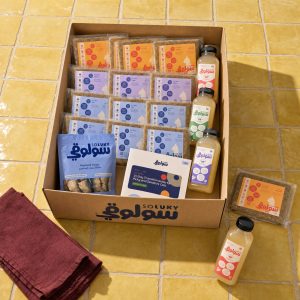
If you would like meals portioned to your kitten’s age and weight and delivered cold, build your box, or start with our cat trial box to see which recipe your kitten prefers.

Gentle Meals for Growing Kittens

Purrfect Chicken Cat Meal – 150gm

Cat Chicken Bone Broth – 500ml

Soluky Cat Trial Box — Starter Kit

Frequently Asked Questions

As a starting point, about 150 to 200 g of gently cooked fresh food a day, split into four meals. That is roughly 190 to 250 kcal. Weigh your kitten weekly and adjust based on steady weight gain and body shape.

Four to six small meals during weaning, four meals a day until about 3 months, three meals from 4 to 6 months, and two to three meals from 6 to 12 months.

No. Kittens cannot digest cow’s milk properly and it often causes diarrhea. Very young or orphaned kittens need a kitten milk replacer, and weaned kittens only need fresh water.

At around 12 months for most cats, and later for large breeds such as Maine Coons. Before then, choose food that is complete and balanced for growth or for all life stages.

Yes, as long as it is complete and balanced for growth or all life stages. Gently cooked fresh food also brings plenty of water. Introduce it gradually over 7 to 10 days so your kitten’s stomach can adjust.